 FishCast AI
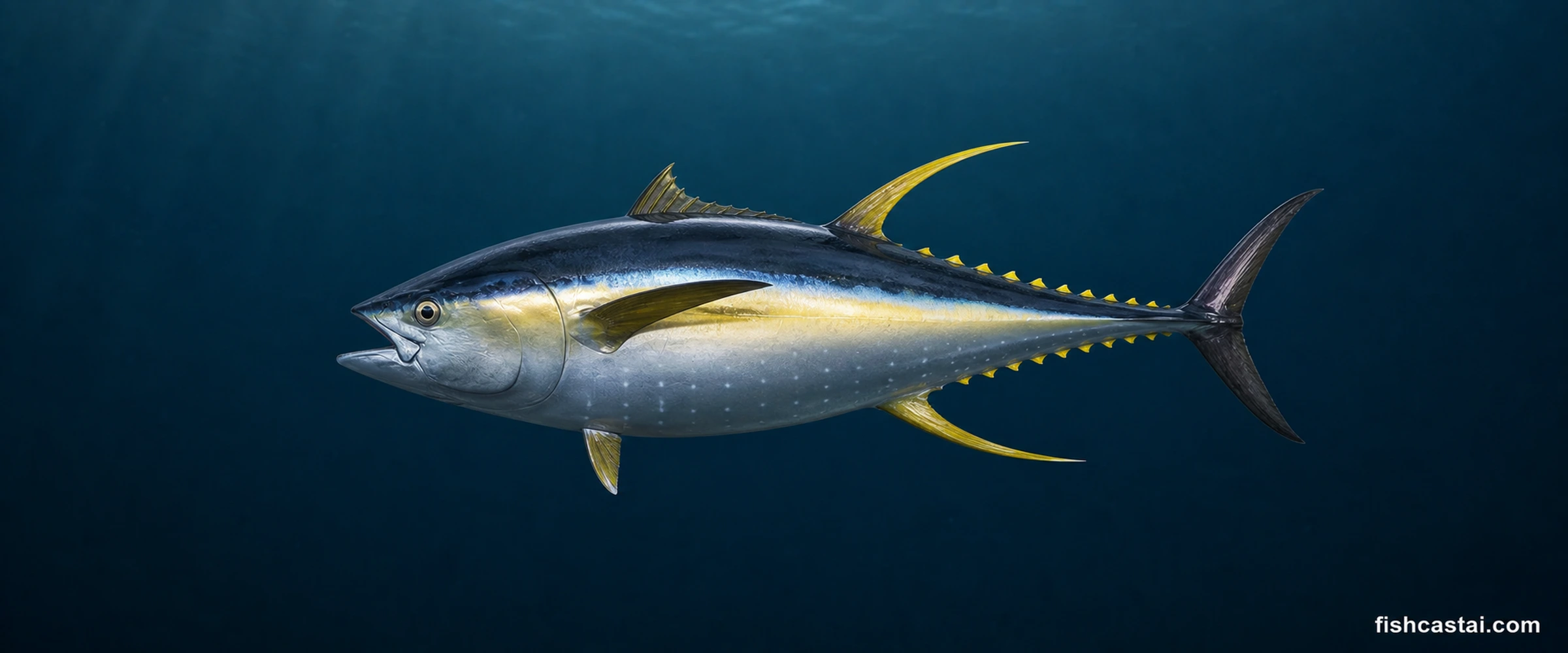
Yellowfin Tuna
Thunnus albacares
Also known as: Ahi, Yellowfin, Kihada, YFT
Stay on the cleanest warm-water edge that holds bait, birds, or structure, then switch from a search troll to live bait, chunking, or vertical jigs as soon as the school reveals its depth.
Max Length
239cm
Typical trophy size
Max Weight
200kg
Record class
Water Temp
64–88°F
Preferred range
Difficulty
4/5
Skill level
How to catch Yellowfin Tuna
Best timing
Fish warm-water pushes, stable weather windows, dawn activity, night chunk bites around structure, and any period when bait is stacked on a clean current edge.
Warm push · dawn feed · night chunk · stable weather
Best methods
Trolling lures to locate fish, then live bait, chunking, knife jigs, poppers, and stickbaits cover the most dependable yellowfin situations.
Troll first · live bait · knife jig · popper
Best presentation
Find the school with the troll, then keep the next bait or jig in the exact depth lane where fish are showing instead of drifting away from the mark.
Depth lane · exact follow-up · clean bait · vertical control
Where they hold
Focus on current breaks, weed lines, FADs, floating debris, offshore banks, seamounts, deepwater rigs, porpoise schools, and bird-driven bait balls.
Current edge · paddies · FADs · deepwater structure
Where to fish for Yellowfin Tuna
Use state guides to narrow the pattern before checking forecast conditions.
Hawaii offers the most reliable U.S. yellowfin fishery, with summer peaks and year-round access.
Hawaii stands apart because yellowfin tuna, known locally as ahi, are available year-round and do not depend on a short seasonal northward push to become reachable. Hawaii Seafood and Western Pacific sources also highlight a strong summer pattern around ahi koa, seamounts, weather buoys, and FAD-style structure, with handline, trolling, and chum-based methods all playing a role.
View state guideLouisiana yellowfin revolve around deepwater rigs, night chunking, and stable offshore weather windows.
Louisiana is one of the premier Gulf yellowfin states because deepwater floaters, current-rich rig zones, and short runs from Venice put fish within range more consistently than most mainland ports. LDWF also treats yellowfin as a major recreational and commercial species, which matches the state's overnight and multi-day tuna culture built around chunking, jigging, and live bait at offshore structure.
View state guideNorth Carolina shines when Gulf Stream water pushes yellowfin within Outer Banks range.
North Carolina stands out because the Gulf Stream brings true blue-water tuna opportunities close enough to support a major charter and private-boat fishery from Hatteras to Morehead City. NC DEQ materials also show yellowfin as a meaningful recreational and commercial species, and the local pattern depends heavily on how close the warm stream edge, bait, and weed lines sit to the coast.
View state guideSouthern California yellowfin are a warm-water late-summer opportunity built around offshore paddies and breaks.
California's yellowfin fishery is concentrated in the south and depends on tropical water pushing north into range of San Diego-based private boats and long-range fleets. California Sea Grant and CDFW materials reflect that highly migratory setup: the fishery is legal year-round, but practical access and catch rates are shaped by warm-water years, offshore paddies, current seams, and where the best blue-water zone settles.
View state guideTexas yellowfin are an offshore rig-and-edge fishery with longer runs than Louisiana.
Texas supports a real yellowfin fishery in Gulf waters, but it is generally more run-distance dependent than the Venice-centered Louisiana scene because many of the best deepwater zones sit farther from port. TPWD treats yellowfin as part of the Gulf offshore fauna, and the practical pattern revolves around stable weather, deepwater structure, and finding clean current-rich water that holds bait.
View state guideDistribution
Seasonal behavior
Seasonal movement
Yellowfin tuna track warm water, prey concentration, and oxygen-rich upper-layer habitat far more than they follow a simple coastline migration. Tropical fisheries can hold fish year-round, while higher-latitude fisheries turn on when warm current pushes bait, paddies, or structure-associated life within range and then fade when those edges slide away. Spawning happens year-round in tropical water and seasonally farther from the equator, so the broadest U.S. feeding windows outside Hawaii usually build from spring through fall rather than winter.
Preferred habitat
Yellowfin tuna prefer blue-water pelagic habitat with strong signs of life: current seams, temperature breaks, surface structure, bait schools, and suspended forage over offshore depth. They use FADs, floating debris, weed lines, oil rigs, banks, and seamounts because each feature concentrates prey and gives roaming schools a reason to pause. The most reliable water combines a clean warm surface layer with enough current to move bait but not so much chaos that the school never settles.
Feeding behavior
Yellowfin tuna are fast pelagic predators that eat baitfish, squid, and crustaceans, usually attacking where current or structure compresses prey into a small lane. They often show first through birds, foamers, breezers, or deep sonar marks that rise into the slick once chum or live bait keeps the school engaged. Because they can move from deep to surface quickly, successful anglers stay ready to change from troll gear to chunking, live bait, or jigging without losing the school.
What changes the bite
The clearest yellowfin bite triggers are a clean temperature break in the 18-31 C band, concentrated bait under birds or porpoise, and enough current to define a chum lane without blowing it apart. Stable weather matters because it keeps boats on the zone and makes it easier to work exact drifts around rigs, paddies, or marks instead of searching blind. Before the trip, check sea-surface temperature charts, current direction, wind, and whether the warm edge is holding near proven structure or offshore banks.