 FishCast AI
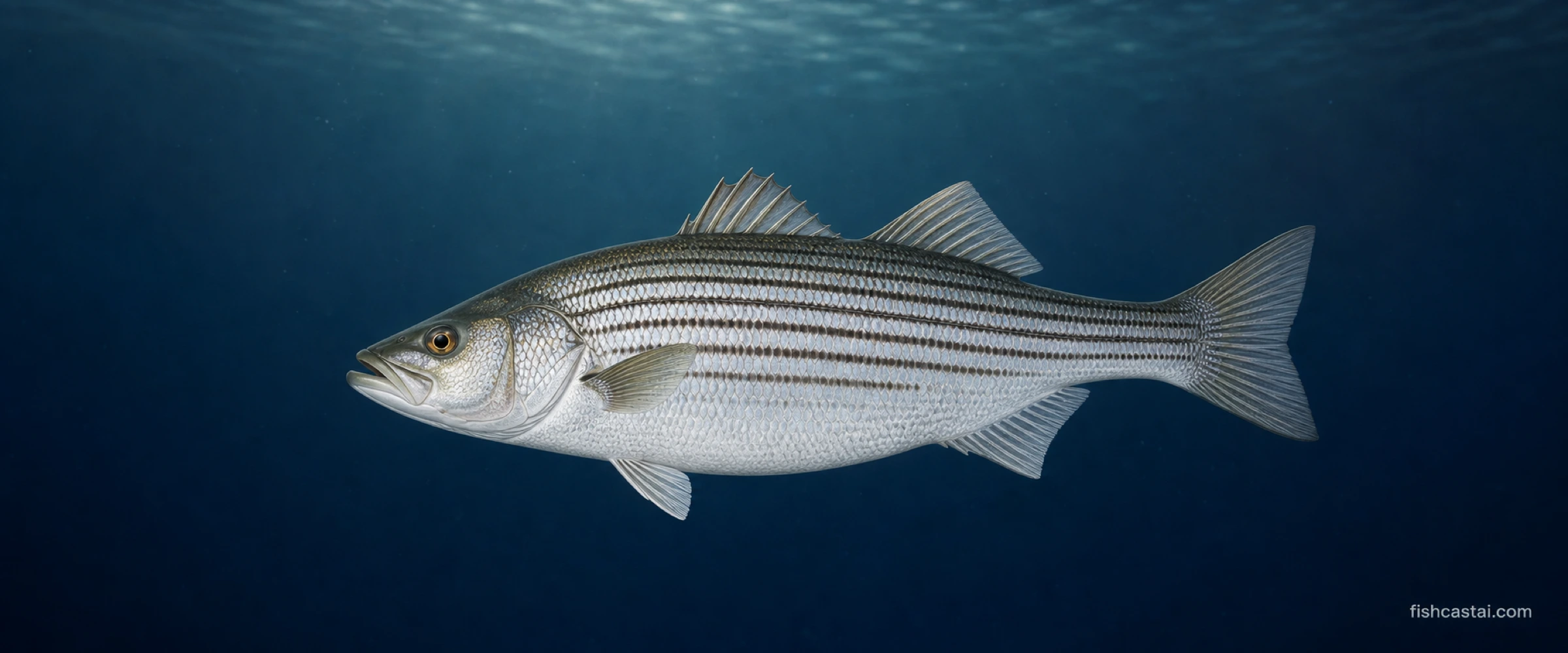
Striped Bass
Morone saxatilis
Also known as: striped bass, striper, rockfish
Start where moving water compresses bait, match your presentation to the tide lane instead of the shoreline, and stay mobile until you find the active depth and current edge.
Max Length
183cm
Typical trophy size
Max Weight
57kg
Record class
Water Temp
50–72°F
Preferred range
Difficulty
3/5
Skill level
How to catch Striped Bass
Best timing
Fish spring migration, fall bait pushes, low-light periods, strong moving tides, and moon-driven current windows when bass stack on predictable lanes.
Spring migration · fall blitz · low light · moving tide
Best methods
Plugs, bucktails, soft plastics, jigs, live eels, live bait, and chunk bait all produce when they are matched to current speed and bait size.
Plug · bucktail · soft plastic · eel · live bait
Best presentation
Present across the current lane, slow down around structure or at night, and keep the lure in the sweep where bait is forced to commit.
Cross-current angle · slow sweep · tide lane
Where they hold
Focus on surf troughs, rips, bridge pilings, inlet mouths, channel edges, estuary points, rocky shorelines, and visible bait-filled seams.
Surf troughs · rips · bridges · channel seams
Where to fish for Striped Bass
Use state guides to narrow the pattern before checking forecast conditions.
Massachusetts is a flagship striped bass state because rips, rocky shoreline, estuaries, and the Cape Cod Canal all intercept major migration waves and hold fish through a long season.
Massachusetts combines famous shore access with large-boat open-water opportunities, which is why it sits at the center of East Coast striper culture. Spring and fall migrations bring big fish through the Cape Cod Canal and along outer-Cape structure, while summer fish spread across rips, beaches, harbors, and flats where bait is concentrated. The strongest state pattern is current plus bait: when sand eels, bunker, or mackerel stack on a rip or shoreline edge, the bite can turn instantly.
View state guideMaryland striped bass fishing is defined by Chesapeake Bay migration, spawning tributaries, and structure-heavy summer water that keeps rockfish spread through much of the state.
Maryland sits at the center of the Chesapeake striped bass cycle. Fish push into the Bay and tributaries in spring, stage around current, ledges, and channel edges, then spread across bridges, points, river mouths, and lower-Bay structure as the warm season develops. The pattern shifts with regulation changes and stock management, but the fishing identity remains the same: tide, bait, and current lines decide where the active fish set up.
View state guideNew York is a top striped bass state because Hudson River spawners, city waters, and Long Island surf and rip zones all create distinct but connected striper patterns.
New York offers one of the broadest striped bass footprints on the coast. Spring fish move through the Hudson system and surrounding urban waters, then summer and fall shift attention to Long Island inlets, beaches, rips, and famous current spots such as Montauk. The state pattern is driven by migration timing, current, and bait, but New York stands out because anglers can intercept fish in rivers, bridges, surf, and open-water rips within the same season.
View state guideNew Jersey striped bass fishing is built around migration funnels, surf structure, inlets, and bays where bait pods can put both shore and boat anglers on fish quickly.
New Jersey sits directly in the Atlantic migration corridor, so the state’s best striped bass fishing follows seasonal movement from spring bay fish to fall ocean and inlet feeding. Raritan Bay, Sandy Hook, Barnegat, inlets, jetties, and open beaches all play, but the highest-percentage pattern remains tied to bait concentration and current seams. The state is especially strong for surf anglers because migratory fish regularly pass close to accessible shoreline structure.
View state guideVirginia striped bass fishing centers on the lower Chesapeake and major tidal rivers where bridge structure, channel edges, and seasonal bait movement hold fish for much of the year.
Virginia’s striped bass water is shaped by the lower Chesapeake, major tidal rivers, and large pieces of current-oriented structure. Fish use river mouths, bridge pilings, tunnels, ledges, and channel edges, then reposition with tide, water temperature, and bait movement. The Chesapeake Bay Bridge-Tunnel and nearby lower-Bay structure define the state’s best-known pattern, but river systems and open-Bay ledges also produce strong seasonal bites.
View state guideDistribution
Seasonal behavior
Seasonal movement
Striped bass move with temperature and forage, pushing through rivers, estuaries, beaches, and channels during spring migration before many settle into summer structure and cooler moving water. Summer fish often hold deeper or feed most actively at night, while fall pulls large numbers of bass back onto beaches, rips, inlets, and open-water bait schools during major bait movements. Winter patterns contract the range and leave the best action to resident or southern fisheries.
Preferred habitat
Striped bass favor current-rich environments with strong bait presence and a clear ambush edge, whether that edge is a bridge shadow, rip line, bar, jetty, point, or channel drop. In tidal systems they concentrate where the flow pins bait against structure, while in reservoirs or inland systems they use points, river channels, and suspended bait schools. The strongest spots always combine current, depth change, and prey movement.
Feeding behavior
Striped bass feed on menhaden, herring, shad, sand eels, squid, crabs, and other prey they can corner in current or against hard structure. They often switch from roaming to highly localized feeding when bait packs tightly on a rip, bridge, inlet, or shoreline bar. Low light, stronger tide flow, and sudden bait concentration are the most reliable ingredients for a wide-open bite.
What changes the bite
Moving water, bait pushed into a seam, overcast skies, night conditions, and favorable temperature bands are the clearest striped bass bite triggers. Slack tide, scattered bait, or heavy daylight pressure can leave fish present but much less willing, especially on open shallow structure. When bass are marking but not eating, the fix is usually a better drift, slower presentation, or a lure profile that matches the exact bait size in the water.