 FishCast AI
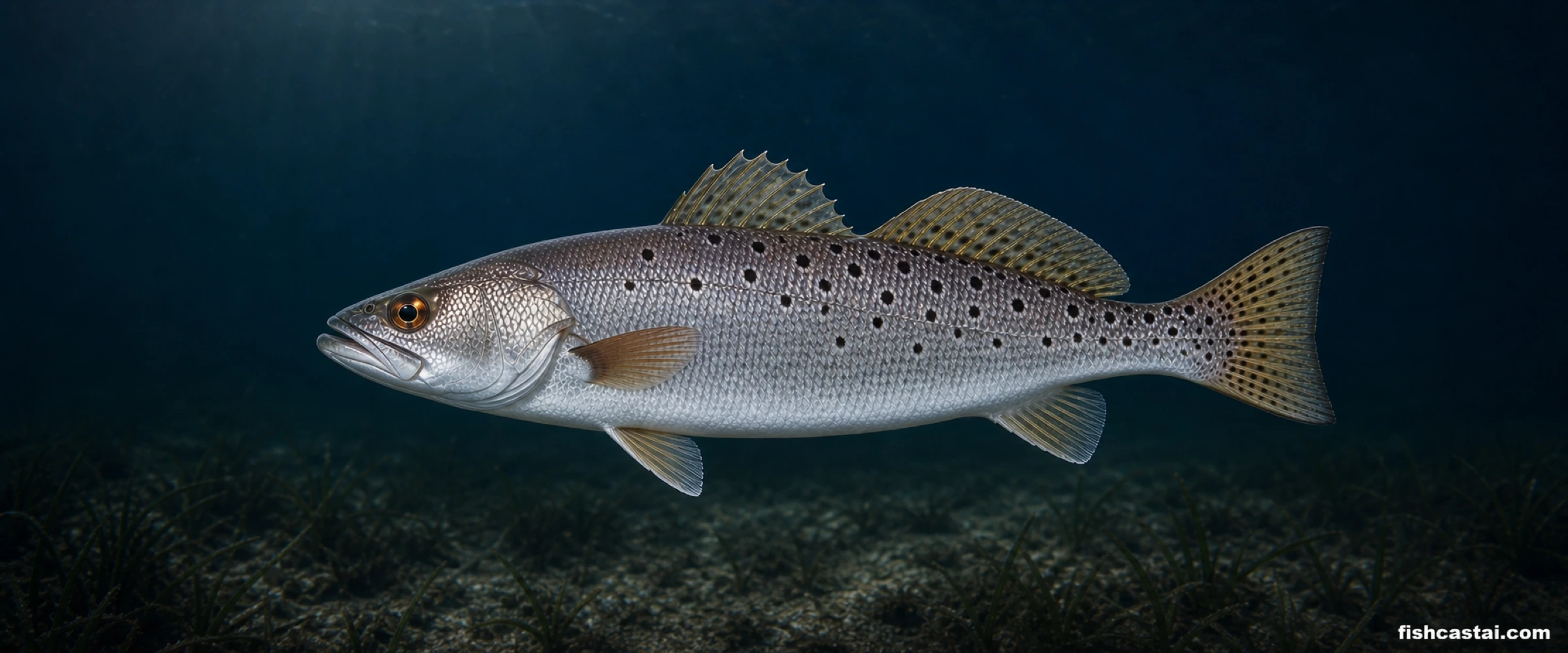
Spotted Seatrout
Cynoscion nebulosus
Also known as: speckled trout, spotted seatrout, speck, spotted weakfish
Start on the cleanest grass edge or pothole with active bait, then let tide, light level, and water temperature decide whether the bite stays shallow or pulls into the nearest channel.
Max Length
98cm
Typical trophy size
Max Weight
7kg
Record class
Water Temp
64–86°F
Preferred range
Difficulty
2/5
Skill level
How to catch Spotted Seatrout
Best timing
Fish dawn and dusk, moving tides, summer dock-light periods, fall shrimp movement, and winter warming trends that pull trout back onto shallow structure.
Low light · moving tide · dock lights · winter warmup
Best methods
Soft plastics, suspending plugs, topwater, live shrimp, popping cork rigs, and small swimbaits all produce when matched to bait size and water clarity.
Soft plastic · twitch bait · topwater · shrimp · cork rig
Best presentation
Work just over the grass or across pothole edges, use pauses to let trout track the bait, and slow down further when fish hold in colder channel water.
Above grass · pothole edge · pause · cold-water slowdown
Where they hold
Focus on grass flats, potholes, dock lights, marsh drains, channels, oyster edges, sandy troughs, and shell points with active bait.
Grass and potholes · dock lights · drains · shell edges
Where to fish for Spotted Seatrout
Use state guides to narrow the pattern before checking forecast conditions.
Texas seatrout fishing centers on the Laguna Madre, Baffin Bay, and the Coastal Bend, where extensive grass flats and shallow clear water keep trout patternable for much of the year.
Texas Parks and Wildlife identifies spotted seatrout as a shallow-bay species strongly tied to sea grass, reefs, and marsh habitat, and the Laguna Madre remains the state’s signature trout region. The best open-water patterns revolve around potholes, grass edges, windward shorelines, and winter channel drops, with trophy-class fish most associated with low-light wading and clean grass structure.
View state guideFlorida seatrout are anchored to extensive seagrass meadows, especially along the Nature Coast and Big Bend where clear shallow flats produce consistent low-light bites.
FWC points anglers toward grass-bed holes, live shrimp, and small pinfish presentations because Florida trout hold around seagrass depressions and feed across the flat when bait is active. Crystal River, Homosassa, Tampa Bay, and other Gulf grass systems are especially productive because they combine broad shallow feeding water with nearby channels and spring-fed stability.
View state guideLouisiana’s marsh-and-bay complex from Barataria to Lake Borgne remains one of the largest seatrout fisheries in the Gulf, with trout spread across bays, ponds, and deeper bay holes.
LDWF’s management materials describe spotted seatrout as estuary-dependent and strongly linked to salinity, marsh edge, and higher-salinity bays, which matches the classic Louisiana pattern. Barataria Bay, Lake Borgne, Delacroix, and Cocodrie all produce because they combine broken marsh, open bays, shell, and deeper refuge water that still fishes after fronts.
View state guideMobile Bay, Perdido Bay, and the lower Alabama estuary produce consistent speckled trout fishing across grass, oyster, and channel structure.
Alabama’s better trout water combines shallow grass and shell with adjacent shipping channels and bay edges, especially in the Mobile Bay complex. The state’s pattern is strongest around first-light drifts on cleaner flats, outgoing-tide creek mouths, and deeper shell or grass edges that hold larger fish once the sun gets up.
View state guideNorth Carolina’s Pamlico, Core, and Bogue systems hold strong speckled trout fishing where shallow sounds, marsh drains, and winter refuge channels overlap.
The state’s trout fishery is shaped by broad shallow sound water and by sudden cold swings that force fish into deeper creeks, canals, and basins. Fall shrimp movement and mild winters are especially important, with larger fish commonly tied to grass edges, marsh drains, and protected channels that warm back up quickly after a cold period.
View state guideDistribution
Seasonal behavior
Seasonal movement
Spotted seatrout spend much of the year sliding between shallow feeding water and nearby guts, channels, or deeper grass edges based on tide and temperature. Spring and early summer often spread them across flats and potholes, while summer nights create strong patterns around dock lights, bridges, and current lines. Fall shrimp movement can stack fish on shell edges and drains, and winter cold snaps concentrate them in deeper channels until a warming trend pulls them back shallow.
Preferred habitat
Spotted seatrout prefer seagrass, shell, soft current lanes, and bottom changes that keep shrimp and baitfish within easy striking distance. Grass flats with broken sand, oyster bars, creek mouths, marsh edges, channels, and sandy troughs are all productive because they offer both forage and quick access to a slightly deeper refuge. The best structure usually combines clean water, active bait, and an edge that defines the feeding lane.
Feeding behavior
Spotted seatrout feed on shrimp, mullet, glass minnows, menhaden, and small baitfish, usually taking prey that crosses a defined edge rather than wandering aimlessly over open bottom. They are highly responsive to low light and moving water, and larger trout often position slightly apart from school fish on the best shell lip, pothole, or deeper grass line. Because they track a bait before striking, pauses and controlled cadence often matter more than speed.
What changes the bite
Moving tide, active shrimp or glass minnows, a mild warming trend in winter, and low light are the clearest spotted seatrout bite triggers. Hard cold fronts can pull fish off the flat and into channels, but they usually stay close enough that a depth adjustment keeps you in the pattern. When trout swipe and miss, changing cadence or pausing longer is usually more effective than instantly changing colors.