 FishCast AI
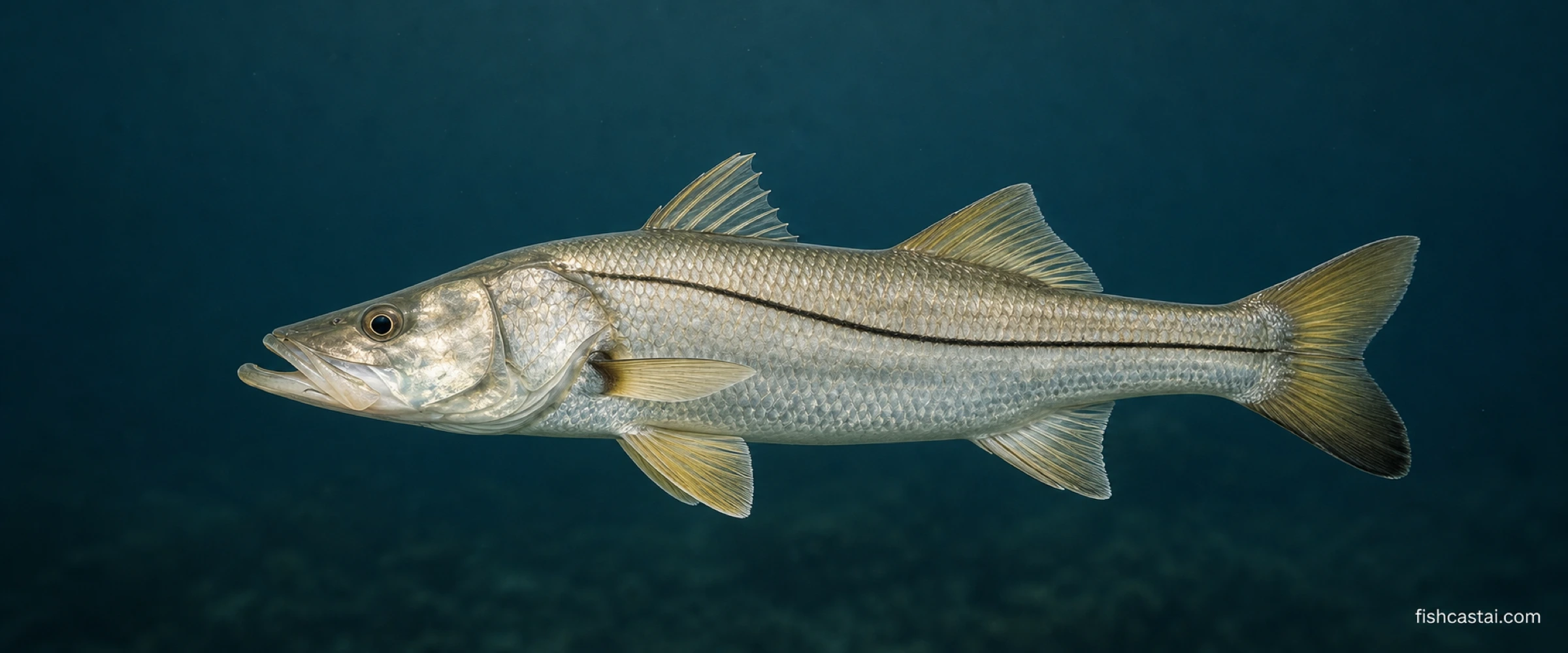
Snook
Centropomus undecimalis
Also known as: Common Snook, Linesider, Robalo, Saltwater Pike
Fish moving tide around hard structure, and match your first stop to the season: winter refuge water inside, then passes, bridges, and beaches once the spawn pull starts.
Max Length
140cm
Typical trophy size
Max Weight
24.3kg
Record class
Water Temp
70–82°F
Preferred range
Difficulty
4/5
Skill level
How to catch Snook
Best timing
Fish warm water, moving tides, summer spawn periods, fall bait pushes, and low-light bridge or beach windows when current lines up with bait.
Warm water · moving tide · low light · bait push
Best methods
Live pilchards, pinfish, mullet, shrimp, twitchbaits, swimbaits, flair jigs, and topwaters all produce when they track the current-facing edge cleanly.
Live bait · twitchbait · swimbait · flair jig
Best presentation
Lead the structure edge, keep the bait in the seam, and vary speed with longer pauses whenever fish track without committing.
Lead the edge · current seam · longer pause
Where they hold
Focus on bridges, dock lights, passes, inlets, beaches, mangrove corners, river mouths, canal mouths, and deep winter refuge holes.
Bridges and lights · passes · mangroves · refuge holes
Where to fish for Snook
Use state guides to narrow the pattern before checking forecast conditions.
East coast snook peak on inlets, dock lights, and lagoon structure.
FWC identifies Jupiter and Lake Worth inlets as repeat spawning locations, which makes the Atlantic side a classic inlet and bridge fishery once water stabilizes in late spring. The nearby Indian River Lagoon and connected canals keep fish available outside the spawn, but current and clean ambush angles decide which shoreline or light holds the best bite.
View state guideSouthwest Florida shines where mangrove estuaries feed beaches, passes, and islands.
The southwest coast gives snook long mangrove shorelines, broad estuaries, and direct access to Gulf passes and beaches, so fish can shift between winter refuge and summer spawning water without leaving the system. Ten Thousand Islands habitat and beach-pass current make this one of the most complete seasonal snook fisheries in Florida.
View state guideSouth Florida keeps snook active longer in mangrove rivers and backcountry basins.
South Florida's tropical climate shortens the winter shutdown and keeps fish spread through mangrove creeks, canals, and bays far later than more northern Florida fisheries. Everglades and upper-estuary refuge water also matter during cold anomalies, because deeper habitats stay warm enough for fish to survive and regroup.
View state guideTampa Bay snook hinge on bridges, bay mouths, and winter refuge canals.
FWC identifies Terra Ceia and Miguel bays inside Tampa Bay as spawning areas, so the local fishery ties upper-bay winter refuge directly to summer lower-bay current. This region also magnifies cold-front effects, which makes canal depth, river mouths, and afternoon warming especially important from late fall through winter.
View state guideTexas snook live on the range edge in warm lower-coast structure.
TPWD places Texas snook on the lower Gulf coast and notes that adults concentrate around Gulf passes, pilings, and other underwater structure when water is warm enough. The Lower Laguna Madre pattern is narrower than Florida because severe winter cold resets the fishery and compresses the reliable range into the warmest lower-coast water.
View state guideDistribution
Seasonal behavior
Seasonal movement
Winter and hard cold fronts pull snook into deeper, warmer upper-estuary water, canals, and river basins where temperature stays more stable. Through spring they slide toward lower estuaries, then spend summer around passes, beaches, inlets, and tidal river mouths where spawning schools form. Fall bait movement keeps fish active on bridges, mangrove shorelines, and first depth changes before they retreat inside again with the next sustained cool-down.
Preferred habitat
Snook set up where current meets cover, especially on mangrove shorelines, bridge pilings, dock lights, passes, canal mouths, river bends, beaches, and seagrass edges with nearby depth. Juveniles favor quieter vegetated creeks and backwaters, while adults shift toward lower-estuary structure and spawning access. The strongest habitat gives them shade, ambush cover, and a direct lane for bait to sweep past.
Feeding behavior
Snook feed on baitfish, shrimp, and crabs, using a current-facing ambush style rather than chasing forage over long distances. They are most aggressive around low light, dock-light edges, bridge shadow lines, inlet current, and beach troughs where bait gets compressed. Because they key so tightly on the strike lane, cast angle and depth control matter as much as lure choice.
What changes the bite
The clearest snook triggers are stable warm water, a strong tide phase, and concentrated bait on a bridge, point, pass, or mangrove edge. Sudden cold pushes fish deeper and slows the bite, but deeper refuge water can restart it once temperature steadies. Before a trip, check whether the tide will move hard enough to create a clean seam and whether recent weather has pulled fish inside or toward the beaches.