 FishCast AI
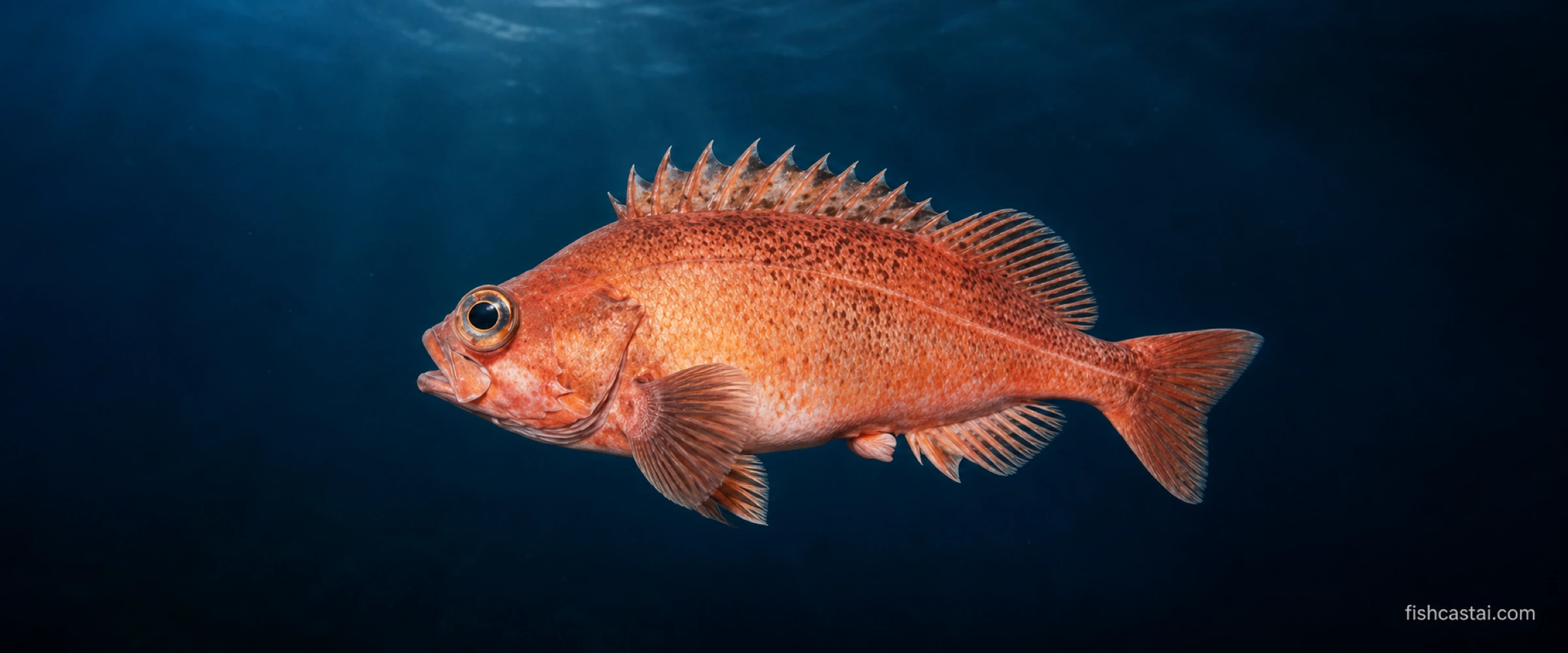
Rockfish
Sebastes spp.
Also known as: rock cod, rockfishes, sebastes
Find hard structure, then find the exact depth band above or on it where the school is holding. Rockfish are often less about covering miles and more about repeating the right water-column level on similar reefs.
Max Length
91cm
Typical trophy size
Max Weight
9kg
Record class
Water Temp
46–61°F
Preferred range
Difficulty
3/5
Skill level
How to catch Rockfish
Best timing
Fish stable spring through fall weather windows and target current periods that let you stay vertical over reefs, pinnacles, and hard-bottom structure.
Stable weather · vertical fishing · current window · reef access
Best methods
Use shrimp flies, compact swimbaits, metal jigs, or bait rigs to cover both suspended schools and bottom fish on reefs, ledges, and pinnacles.
Shrimp fly · swimbait · metal jig · bait rig
Best presentation
Drop through the column until you find the school’s depth band, then keep the rig hanging in that zone with small lifts or a controlled hold.
Find the band · vertical control · small lifts · suspended school
Where they hold
Focus on reefs, pinnacles, wrecks, boulder fields, and hard-bottom ridges where current and bait stack fish at a repeatable depth.
Pinnacle · wreck · boulder field · depth band
Where to fish for Rockfish
Use state guides to narrow the pattern before checking forecast conditions.
California rockfish fishing is built around reef complexes, pinnacles, and hard-bottom structure where finding the right depth band is more important than covering water.
California offers huge variety within the Pacific rockfish complex, from shallow nearshore fish to deeper mixed-species schools. Anglers who use sonar and repeat productive depth levels usually outperform those who fish every drop all the way to bottom.
View state guideOregon rockfish are a classic reef and hard-bottom target where safe sea windows and vertical control define the day.
The Oregon coast offers consistent structure fishing, but swell and drift speed decide whether you can actually stay on the productive reef line. Once you find a school, repeated short drifts on the same contour usually keep the box filling.
View state guideWashington rockfish fishing relies on hard-bottom structure in marine areas where the active school depth can change quickly with current and pressure.
Washington anglers often work a mix of nearshore structure and deeper marine-area reef habitat. The fish are still classic hard-bottom school fish, but the productive layer may sit higher in the column than the bottom chart suggests.
View state guideAlaska rockfish live on cold deep structure where schools can stack hard around current and bait, but depth and sea conditions demand precise vertical fishing.
Compared with farther south, Alaska rockfish commonly use deeper colder structure and may mix with other bottomfish patterns. The core rule still holds: find hard relief, control your vertical line, and stay in the school’s actual layer.
View state guideDistribution
Seasonal behavior
Seasonal movement
Rockfish remain structure-oriented all year, but practical fishing opportunity usually peaks when weather opens safe access to nearshore and offshore hard bottom. Different species groups can shift shallower or deeper with season, bait, and current, even when they stay on the same general reef complex. The best pattern is usually not a migration but a specific depth band over productive structure.
Preferred habitat
Pacific rockfish prefer hard-bottom habitat with enough relief to collect forage and give schools a clear holding edge. Reefs, pinnacles, wrecks, ledges, and boulder fields all work because fish can suspend over the top or hold near bottom cracks and corners. The strongest spots offer clean current and a contour that lets you stay vertical through the right depth zone.
Feeding behavior
Rockfish feed on shrimp, squid, small baitfish, and other prey that move over the structure in current. Many species school tightly by size or species group, so the bite may come from one narrow layer in the water column rather than all over the reef. That is why sonar marks, the depth of the first bite, and repeatable drifts matter so much.
What changes the bite
Current that pushes forage over the structure, safe sea conditions, and a vertical drift are the biggest rockfish bite triggers. Too much drift speed makes it impossible to hold the school’s depth band, while slack current can spread fish out and soften the action. When one reef stops producing, changing depth on a similar structure often works faster than changing lure style.