 FishCast AI
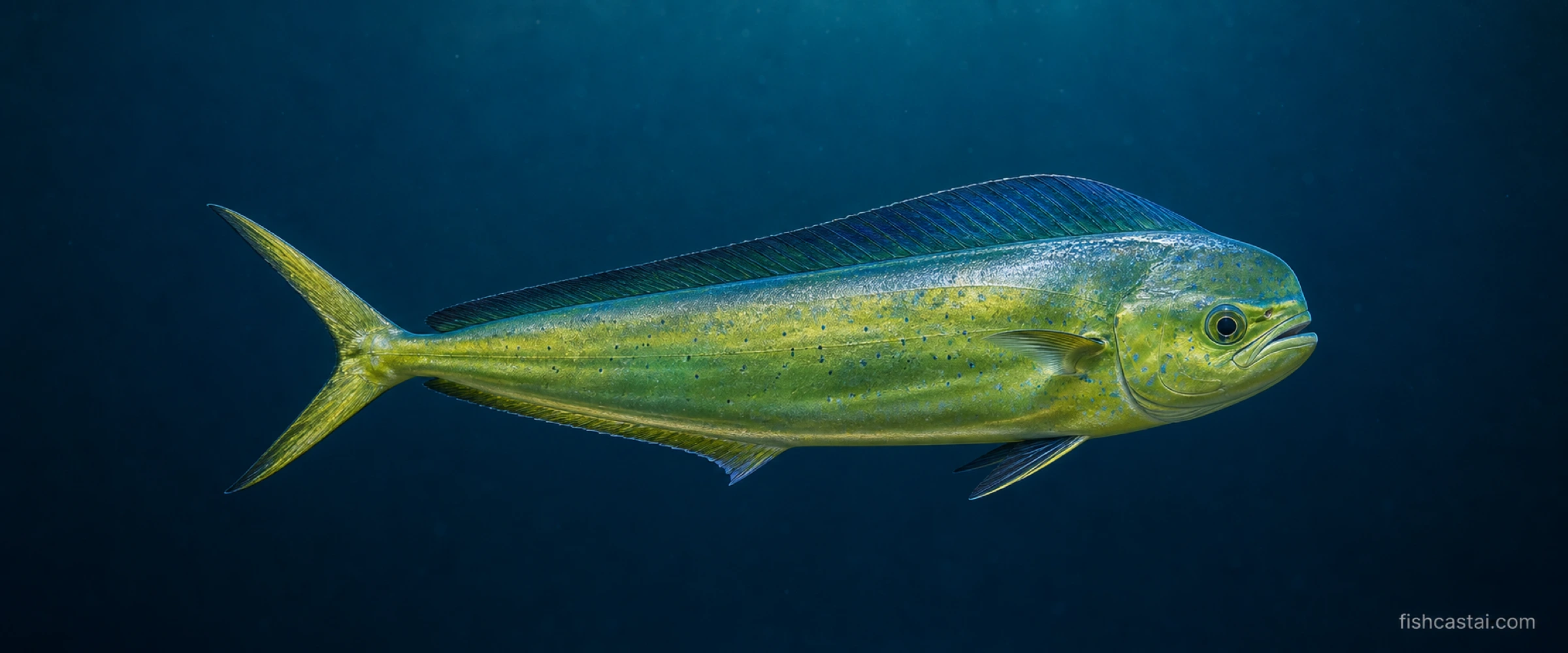
Mahi Mahi
Coryphaena hippurus
Also known as: Dolphinfish, Dorado, Mahi
Run the cleanest weed line or floating object you can find in 21 to 30 C blue water, troll until fish show, then hold the school with pitch baits or chum instead of leaving after the first hookup.
Max Length
210cm
Typical trophy size
Max Weight
39.9kg
Record class
Water Temp
70–86°F
Preferred range
Difficulty
3/5
Skill level
How to catch Mahi Mahi
Best timing
Fish the strongest blue-water windows of late spring through early fall when warm current, clean water, and floating cover line up offshore.
Warm current · clean blue water · late spring · floating cover
Best methods
Use a trolling spread to find fish first, then switch to pitch baits, jigs, or live baits once a school shows under the boat.
Trolling spread · pitch baits · jigs · live bait
Best presentation
Keep the bait high in the water column and move it fast enough to look like fleeing forage without pulling it away from the school.
Upper water column · brisk retrieve · fleeing bait · stay visible
Where they hold
Target weed lines, pallets, buoys, FADs, rip edges, and current seams that pin bait near the surface offshore.
Weed lines · FADs · current seams · floating debris
Where to fish for Mahi Mahi
Use state guides to narrow the pattern before checking forecast conditions.
Florida gets the most consistent Atlantic mahi access with Gulf Stream water close offshore.
South Florida boats can reach Gulf Stream current, weed lines, and floating debris on shorter runs than most East Coast ports. That proximity creates a longer practical season and makes pitch-baiting schools around floating cover a standard Florida pattern instead of a rare weather-window opportunity.
View state guideNorth Carolina combines strong summer mahi numbers with direct runs to Gulf Stream water.
Cape Hatteras, Oregon Inlet, and Morehead City give anglers direct access to Gulf Stream water that carries sargassum, flyers, and roaming schools through the warm season. Compared with Florida, the North Carolina bite is more seasonal, but it can be exceptionally concentrated when summer current lines and floating weed set up cleanly offshore.
View state guideTexas mahi gather around Gulf rigs, weed mats, and blue-water edges offshore.
Texas anglers lean on oil and gas platforms, floating structure, and summer blue-water pushes to locate mahi across the western Gulf. The fishery is more structure-driven than the South Atlantic weed-line game, and productive trips often revolve around rigs, buoys, and sargassum within reach of long-run offshore boats.
View state guideHawaii offers the longest mahi season thanks to year-round warm pelagic water and FADs.
Hawaii's fishery stays active far longer than Atlantic and Gulf fisheries because tropical water remains warm and pelagic year-round. State FADs and offshore current lines create repeatable structure, so anglers can target mahi around a more stable open-ocean pattern than the seasonal weed-line windows common on the mainland.
View state guideSouth Carolina shines when summer weed lines set up off Charleston and Hilton Head.
South Carolina's offshore mahi fishery depends on stable summer current and fishable sea conditions that let boats work weed lines and temperature breaks offshore of Charleston and Hilton Head. The season is narrower than Florida's, but fish often stack tightly on clean Gulf Stream structure when blue water settles in close enough for routine runs.
View state guideDistribution
Seasonal behavior
Seasonal movement
Mahi mahi track warm pelagic water and become most available to US anglers once blue-water current pushes sargassum and bait within range of offshore fleets in spring and early summer. Summer keeps fish spread across weed lines, FADs, and floating debris with the heaviest action where current and bait stay organized, then fall fishing stays good anywhere warm edges persist offshore. Winter reduces US range to southern waters and tropical Pacific zones where warm current still supports surface bait and floating cover.
Preferred habitat
Ideal mahi water is clean, warm, high-salinity blue water with visible surface structure such as sargassum mats, pallets, trap buoys, FADs, or rip lines. Fish hold in the top part of the water column where bait collects under shade and current relief, while larger bulls stage just off the main object or on the current-facing side. Productive zones usually sit well offshore over deep water where pelagic bait can gather without shoreline interruption.
Feeding behavior
Mahi mahi feed on flying fish, squid, sardines, small mackerel, and other pelagic baitfish they can trap against floating structure or attack in open water. They hunt visually and react fast to chum, flashing jigs, and surface commotion, which is why active schools stay high and aggressive once the boat stops on them. Feeding peaks when bait stacks tightly under cover or along color changes and the school can ambush prey without leaving the upper water column.
What changes the bite
The bite improves when warm current sharpens a color break, floating weed consolidates, and bait schools stay visible under birds or surface life. Stable weather helps offshore water stay clean and fishable, while messy sea state and broken current spread bait and reduce the number of obvious targets. Before a trip, check sea-surface temperature charts, current position, and recent reports on weed lines or floating objects rather than relying on calendar date alone.