 FishCast AI
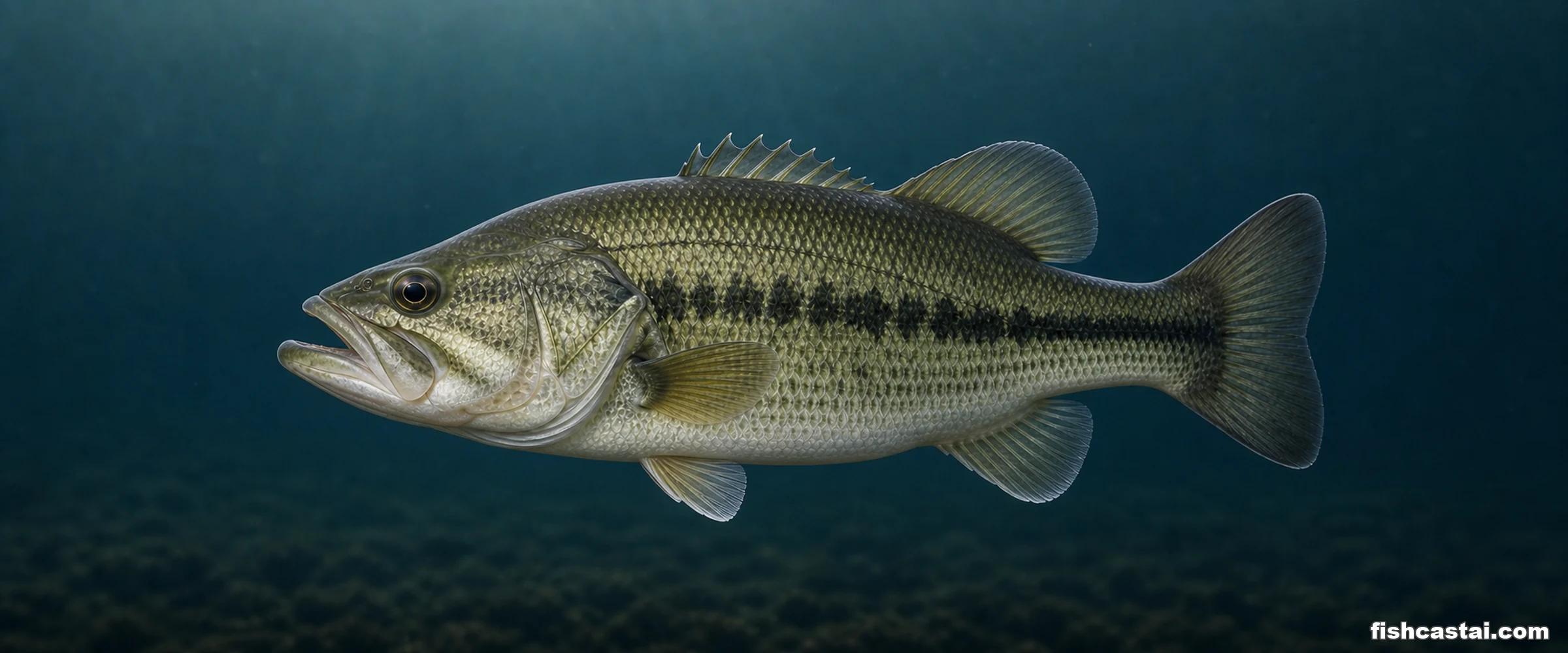
Largemouth Bass
Micropterus salmoides
Also known as: Bucketmouth, Bigmouth Bass, Black Bass, Green Bass
Most consistent when water is between 18–24°C, fish are positioned near cover transitions, and presentations stay slow and tight to structure during low-light windows.
Max Length
83cm
Typical trophy size
Max Weight
10.1kg
Record class
Water Temp
59–81°F
Preferred range
Difficulty
3/5
Skill level
How to catch Largemouth Bass
Best timing
Early morning and dusk produce the most reliable feeding windows, with pre-spawn spring and fall cooling phases being the most productive seasons overall.
Low light · pre-spawn push · fall feed · stable pressure
Best methods
Texas rig, topwater, jigs, and moving search baits like crankbaits and spinnerbaits cover the full range of productive situations across seasons.
Texas rig · topwater · jig · crankbait
Best presentation
Slow down and pause near cover in pressured or cold conditions, then speed up with reaction baits when fish are active and chasing in fall or pre-spawn.
Pause and drag · tight to cover · match the retrieve to temp
Where they hold
Focus on grass edges, laydowns, dock pilings, rock points, and channel ledge drops where cover meets a depth change or open-water access.
Cover edges · depth transitions · ambush lanes · structure
Where to fish for Largemouth Bass
Use state guides to narrow the pattern before checking forecast conditions.
Year-round shallow cover fishing with trophy potential in warm, vegetation-rich water.
Florida holds pure Florida-strain largemouth bass (Micropterus salmoides floridanus) that grow faster and heavier than northern-strain fish, making it the top destination for anglers chasing double-digit bass. The subtropical climate compresses seasonal transitions and produces active fish in shallow vegetation across almost every month of the year.
View state guideReservoir structure, creek arm staging, and trophy-class fish on well-managed impoundments.
Texas combines Florida-strain genetics in many of its major reservoirs with intensive management by the Texas Parks and Wildlife Department, producing some of the heaviest largemouth bass in the country outside of Florida itself. Lakes like O.H. Ivie, Fork, and Falcon regularly yield bass over 10 pounds, and the diverse reservoir system gives anglers year-round opportunities across different seasonal patterns.
View state guideTrophy-class Florida-strain fish in clear, deep reservoirs with technical structure fishing.
California has produced 20 of the top 25 heaviest largemouth bass ever recorded in the US, a direct result of Florida-strain genetics introduced into the state's reservoir system combined with abundant forage including stocked rainbow trout. The fishery demands more technical approaches than most states — clear water, angling pressure, and reservoir-specific structure require finesse presentations and careful bait selection.
View state guideClassic southeastern reservoir fishing with strong spring bites and legendary history.
Georgia is the birthplace of the IGFA all-tackle largemouth world record — George Perry's 22 lb 4 oz bass from Montgomery Lake in 1932 — and the state's diverse reservoir and river system continues to produce quality fishing. Lakes Lanier, Hartwell, and Walter F. George offer reliable largemouth action across all seasons, with strong spring spawning bites and productive fall patterns.
View state guideTennessee River ledge fishing and grass-mat flipping on a world-class reservoir system.
Tennessee's reservoir system — anchored by Lake Guntersville, Chickamauga, and Kentucky Lake — hosts some of the most technically demanding and rewarding largemouth fishing in the country, with the Tennessee River ledge pattern producing bass at 15–25 feet in summer that rival any reservoir system in the South. Hydrilla and coontail grass mats on Guntersville create classic grass fishing that mirrors Florida tactics in a mid-South setting.
View state guideDistribution
Seasonal behavior
Seasonal movement
Spring is the most predictable season — bass stage in creek arms and secondary points before pushing to shallow beds as water reaches 16–18°C, making them highly concentrated and catchable. Summer heat scatters fish between deep ledge structure and shallow cover, with most activity compressed into early morning and evening low-light windows. Fall reverses the pattern as cooling water draws bass back shallow to chase migrating shad, producing some of the fastest-moving and most aggressive bites of the year before winter pushes fish to slow, deep wintering holes at 6–20 feet.
Preferred habitat
Largemouth bass are defined by their relationship with cover — they use vegetation, wood, docks, and rock to ambush prey rather than roaming open water. Ideal holding water combines a hard edge or transition (grass line, dock row, point) with nearby deep-water access, giving fish both a staging area and a quick escape route. Stained to moderately clear water in the 2–15 foot range typically holds the most catchable fish, with clearer lakes pushing bass into denser cover or deeper structure.
Feeding behavior
Largemouth bass are classic ambush predators — they hold in or near cover and strike prey that enters their zone rather than actively pursuing meals across open water. Their diet is broad and opportunistic: shad, bluegill, crayfish, frogs, and even small rodents or birds are all fair game, with shad and bluegill making up the bulk of the diet in most reservoir settings. Feeding activity peaks at dawn and dusk and during overcast conditions, when reduced light levels give bass a decided advantage over their prey.
What changes the bite
A sustained warming trend after a cold front is one of the most reliable triggers — bass that were shut down for 24–48 hours post-front become aggressively catchable as stable, warming conditions return. Wind pushing baitfish against a bank or point concentrates both prey and bass, creating short but very productive windows. In spring, a 1–2°C water temperature rise over several consecutive days is the clearest signal to move shallow and target pre-spawn staging fish before the beds fill.