 FishCast AI
Chinook Salmon
Oncorhynchus tshawytscha
Also known as: king salmon, chinook, blackmouth
Find the migration lane first and the presentation second. Chinook are most catchable when your bait stays in the exact depth and current band the run is using that day.
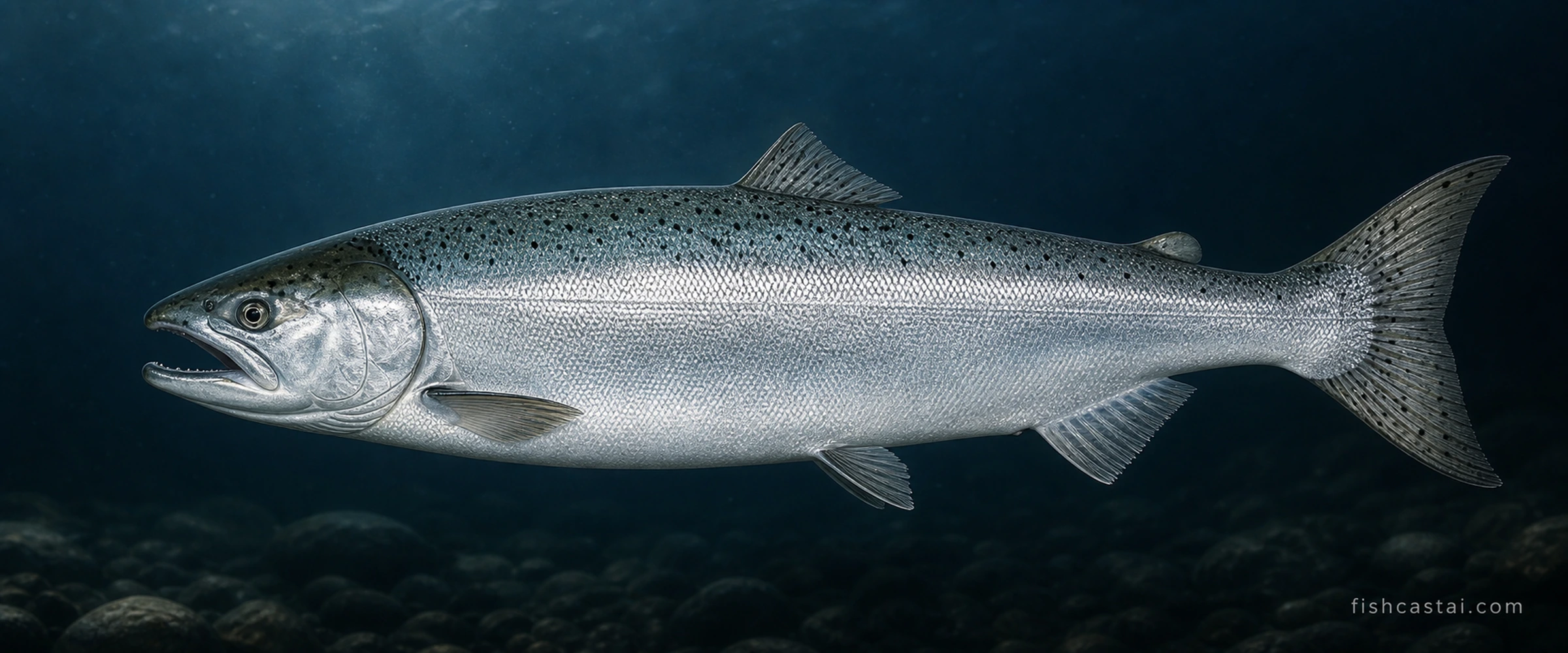
Max Length
150cm
Typical trophy size
Max Weight
57kg
Record class
Water Temp
46–61°F
Preferred range
Difficulty
4/5
Skill level
How to catch Chinook Salmon
Best timing
Fish the leading edge of spring and summer ocean or lower-river runs, then key on estuary and main-river staging periods as late-summer and fall returns build.
Run timing · tidewater · summer staging · fall returns
Best methods
Troll or mooch herring, anchovies, plugs, and flashers in saltwater, then switch to roe, plugs, spinners, or jigs in tidewater and river travel lanes.
Trolling · herring · flashers · roe drift
Best presentation
Keep the bait in the exact migration depth band and current seam instead of covering random water or changing lures too quickly.
Depth control · travel seam · repeat passes · run stage
Where they hold
Focus on ocean bait lanes, river mouths, tidewater seams, deep travel slots, ledges, estuary channels, and softer current beside the main migration corridor.
River mouth · tidewater seam · deep slot · migration lane
Where to fish for Chinook Salmon
Use state guides to narrow the pattern before checking forecast conditions.
Alaska offers the biggest average Chinook salmon in the U.S., with strong saltwater and river fisheries tied to short but intense summer runs.
Alaska fish often arrive in icy, tide-influenced systems where cool water keeps them aggressive longer than southern runs. Saltwater staging and lower-river travel lanes can both be excellent, but exact run timing matters because windows move quickly.
View state guideWashington combines Puget Sound blackmouth opportunity with major Columbia and coastal Chinook runs that create nearly year-round strategic windows.
Washington is unique because resident blackmouth and migratory Chinook patterns overlap depending on season and basin. Tidewater, Sound structure, and big-river staging water can all be productive, but each demands different depth control.
View state guideOregon Chinook fishing is built around Columbia influence, coastal river runs, and short seasonal surges that reward anglers who track each basin separately.
Oregon offers springers, fall runs, and coastal returns that all behave differently in tidewater and upstream travel water. The best bites often follow tide pushes, cool flow, and periods when fresh fish first stack at the mouth of a system.
View state guideCalifornia Chinook opportunity centers on ocean staging and Sacramento-system returns, where water management and run strength shape the bite more than in northern states.
California fish often face warmer conditions and tighter seasonal windows, so productive days can be clustered around cool-water periods and fresh pushes of fish. Ocean staging, bay approaches, and major river corridors all matter, but every pattern depends on current regulations and run status.
View state guideDistribution
Seasonal behavior
Seasonal movement
Chinook shift from open-ocean feeding water toward coastal staging lanes, estuaries, and major rivers as each stock approaches its run timing. Spring and summer often bring the most consistent saltwater and lower-river opportunities, while late summer and fall stack fish in big estuary and river systems. Once water warms too far or flow changes sharply, fish often reposition within the corridor rather than abandoning the migration entirely.
Preferred habitat
Chinook prefer cold, oxygen-rich water with either concentrated bait in the ocean or efficient travel lanes in estuaries and rivers. Saltwater fish use bait schools, contour edges, rips, and river-mouth current, while freshwater fish hold in deep seams, ledges, tidewater slots, and softer edges along the main channel. Productive spots let the fish save energy without fully leaving the route upstream.
Feeding behavior
Ocean-phase Chinook are committed baitfish predators, feeding on herring, anchovy, squid, and similar forage that supports trolling and mooching patterns. Freshwater fish become less true-feeding oriented and react more to position, travel behavior, and irritation responses. That is why river success often comes from precise lane control rather than trying to trigger an obvious chase bite.
What changes the bite
Run timing, tide movement, cool water, and bait concentration are the biggest Chinook bite triggers in both ocean and lower-river fisheries. In rivers, flow changes and temperature spikes can push fish tighter to deeper lanes and shorten active windows. When bites die, the first adjustment should be depth and travel path rather than color rotation.