 FishCast AI
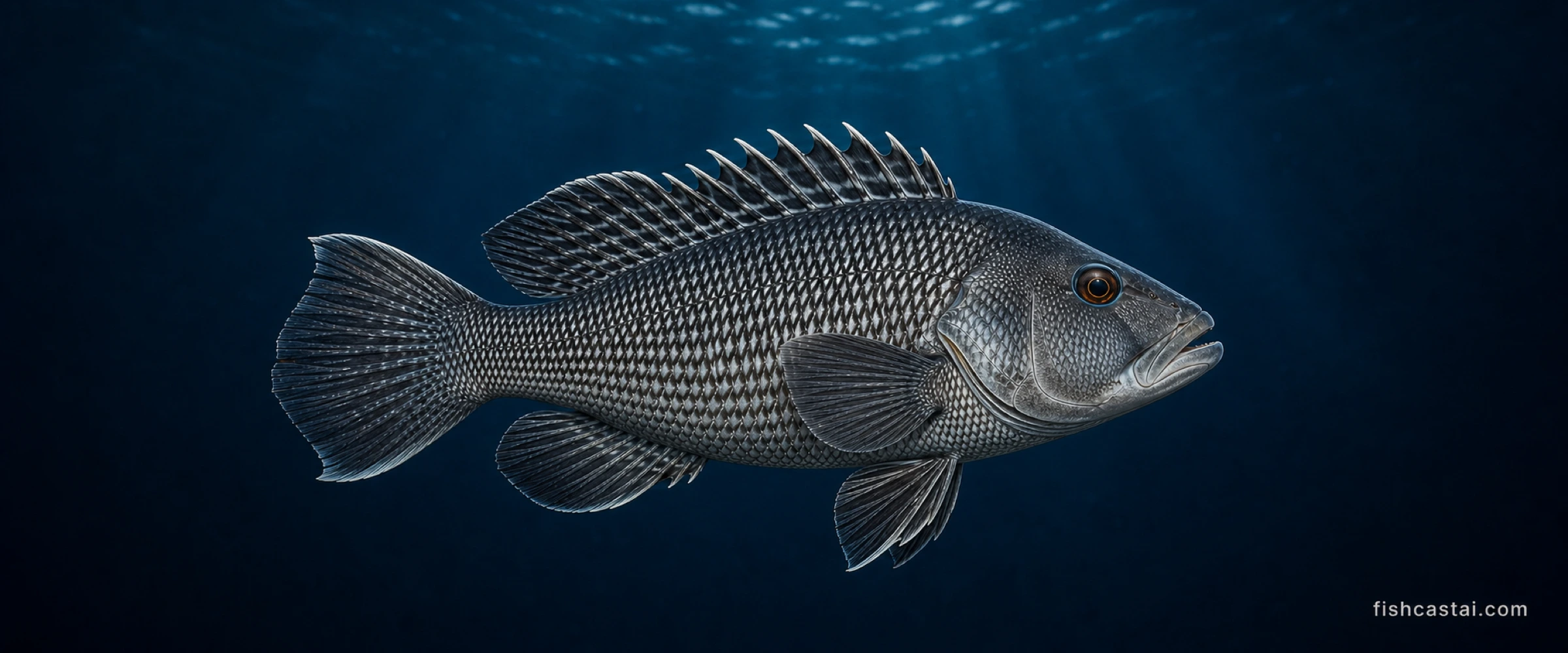
Black Sea Bass
Centropristis striata
Also known as: Blackfish, Atlantic Sea Bass, Old Humpback
Set up directly over the highest part of a wreck or reef, fish a vertical bait or jig tight to bottom, and stay on structure until the school reloads.
Max Length
66cm
Typical trophy size
Max Weight
4.3kg
Record class
Water Temp
59–75°F
Preferred range
Difficulty
3/5
Skill level
How to catch Black Sea Bass
Best timing
Fish the strongest bite from late spring through fall in northern waters, and key on dawn, dusk, and moving current over structure.
Late spring · summer reefs · low light · moving current
Best methods
Use squid or clam on dropper rigs, then switch to bucktails or metal jigs when fish show above wrecks or reef peaks.
Dropper rigs · squid bait · bucktails · metal jigs
Best presentation
Keep the rig vertical, tap bottom without dragging, and work short lifts that stay tight to the exact piece of structure.
Vertical line · bottom contact · short lifts · precise drift
Where they hold
Focus on wrecks, rock piles, mussel beds, reef edges, jetty corners, and hard-bottom humps surrounded by softer bottom.
Wrecks · reef edge · mussel beds · hard bottom
Where to fish for Black Sea Bass
Use state guides to narrow the pattern before checking forecast conditions.
Massachusetts gets a strong May-to-October reef bite centered on Buzzards Bay and the Sounds.
Massachusetts DMF notes that large schools generally arrive in May, stay abundant through October, and concentrate in Buzzards Bay plus Nantucket and Vineyard Sounds. The local fishery is more seasonal than southern states, but it offers some of the most consistent inshore structure fishing of the year once the biomass pushes north.
View state guideNew Jersey reef fishing is all about precise anchoring over hard structure on the 15-site reef network.
NJDEP emphasizes that black sea bass are directly associated with reefs and that fall is a prime window on all 15 artificial reefs. New Jersey's fishery stands out because the reef network creates repeatable numbers fishing, but only if the boat is set exactly on the structure rather than drifting empty bottom.
View state guideNorth Carolina gets an earlier, longer hard-bottom bite with fish spread across reefs north and south of Hatteras.
North Carolina DEQ notes that black sea bass around the South Atlantic stock occur more inshore with other reef fish, inhabit irregular hard bottom, and spawn from February through May. That earlier spawn and broader reef footprint make the state fishery feel longer and less tightly compressed than the northern Mid-Atlantic season.
View state guideRhode Island combines Narragansett Bay, Rhode Island Sound, and Block Island Sound structure into one tight summer fishery.
Rhode Island DEM describes black sea bass as a temperate reef species tied to reefs, oyster beds, rock outcroppings, and wrecks, and the state now runs a dedicated fish pot survey in Narragansett Bay and Rhode Island Sound. Rhode Island stands out because the fishery spans both bay and outer-sound structure, letting anglers track the same species across a compact coastal footprint.
View state guideMaryland blends an Ocean City wreck bite with juvenile use of the lower Chesapeake Bay.
Maryland DNR notes that adult black sea bass use reefs, wrecks, rocky bottom, pilings, jetties, and oyster bars, while juveniles move into the lower Chesapeake Bay from April through December. That nursery connection gives Maryland a different look from pure offshore states because bay habitat matters to the life cycle even when keeper fishing centers on the ocean side.
View state guideDistribution
Seasonal behavior
Seasonal movement
Northern black sea bass move inshore and north as spring water warms, hold on nearshore reefs and wrecks through summer, then slide offshore and south in fall as bottom temperatures fall. NOAA habitat work shows offshore migration begins when bottom temperatures approach about 7 C, so the fall shift can happen quickly after the first strong cooling trend. Southern fish stay more reef-attached through winter and begin spawning earlier, which stretches the active season farther down the coast.
Preferred habitat
Adult black sea bass hold on structurally complex bottom such as wrecks, rocky reefs, cobble, mussel beds, pilings, and hard-bottom patches where they can shelter and ambush prey. The best spots combine a hard edge, vertical relief, and a nearby sand or shell lane that gives the fish room to feed without leaving cover. In estuaries and bays, juveniles favor high-salinity structured habitat before shifting to deeper coastal structure as they grow.
Feeding behavior
Black sea bass eat crabs, shrimp, worms, clams, squid, and small fish, feeding as aggressive bottom predators around structure. They rise a short distance to intercept a jig, but the most consistent feeding happens when current pushes forage across the face of a reef or wreck and keeps prey concentrated. Dawn, dusk, and steady current windows usually produce the most decisive bites, especially when the bait stays close to bottom.
What changes the bite
The bite improves when warming spring water pulls fish onto accessible structure, when current keeps the presentation vertical, and when stable weather allows boats to stay precisely over the high spot. Cooling fall water can also sharpen the feed right before fish leave shallow structure, especially on reef systems with concentrated bait and clear bottom relief. Before the trip, check bottom temperature, drift speed, and whether swell or wind will keep the rig on the piece long enough to matter.